
Some of the World’s Most Advanced Ports Were Represented at the CCICADA/DIMACS Workshop on AI-powered Automation in Ports
Some of the World’s Most Advanced Ports Were Represented at the CCICADA/DIMACS Workshop on AI-powered Automation in Ports
With support from the National Science Foundation, the CCICADA and DIMACS Centers hosted a workshop on AI-powered Automation in Ports during the period March 30 to April 1, 2026. Among the attendees were experts in port automation from Antwerp-Bruge, Hamburg, and Rotterdam, home of some of the world’s most advanced ports.
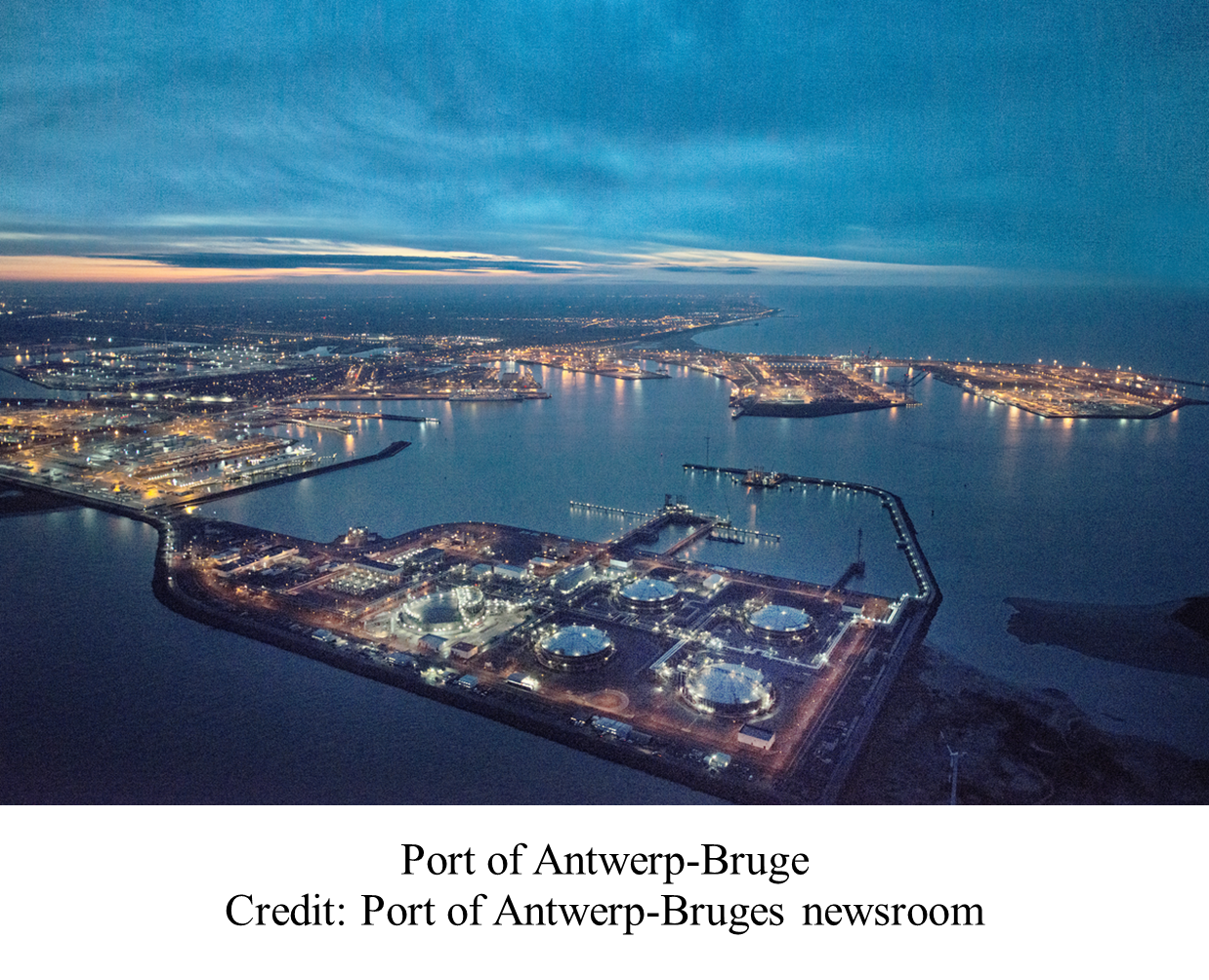 With the dramatically increasing world-wide demand for all kinds of goods, ports need to find new ways to meet the increasing volume. Modern ports have achieved greater efficiency and increased capacity through automation, for example through integrated and coordinated use of automated vehicles and cranes, drones, smart sensors, robots and robotic devices; more rapid communication and information sharing; new logistics systems.
Automation has allowed modern ports to move goods more rapidly and safely, and to develop procedures that are designed to make them more resilient in the face of disruptions. Artificial Intelligence offers the opportunity to take the benefits of automation to the next level, to increase the efficiency and capacity of ports even further. While this greatly widens the scope of automation, it raises new challenges and potentially serious risks.
What Might AI-powered Automation Do?
Among the examples that workshop speakers mentioned were that AI-powered automated systems in smart ports can or will;
- Load and unload ships using highly automated cranes
- Move and track cargo within ports on roadways and rails
- Record and allow the arrival and departure of cargo to and from ports
- Reroute cargo to avoid delays, congestion, or bad weather
- Look for anomalies that indicate a mechanical problem with a crane or an autonomous vehicle transporting containers between ships and storage areas
- Aid in the speedier and more efficient connection of ships to port power
- Get goods to nearby warehouses faster and more efficiently than trucks operating on congested roadways
In short, AI and automation have emerged as transformative technologies that promise to revolutionize port operations. These technologies offer the potential to mitigate the challenges faced by traditional port operations, such as congestion, delays, and rising labor costs.
Automation is Not New
Automation is not a new development. Its origin goes back to the first waterwheels developed in the 1st century BC. Use of robots traces back to the 1950s. What is different now is that traditional automation involves systems programmed for specific tasks without the ability to adapt to unforeseen situations whereas AI-powered automation can learn and adapt to new information and is able to make decisions in new and increasingly complex environments, without human intervention.
AI-based Automation Has Risks
Interfacing AI with automation has risks such as giving rise to new kinds of disruptions and potential loss of resilience if complex, sophisticated systems become damaged or overwhelmed by disruptions that simpler machines and workers with traditional skills would overcome. Other risks arise from the increased impact of loss of electric power, the potential for cascading impacts due to increased networking and integration of systems, the increased vulnerability to cyberattacks, and the potential for machines creating damage if given increased autonomy to make decisions. All of these, as well as the potential for loss of jobs, were discussed at “breakout” group meetings during the workshop.
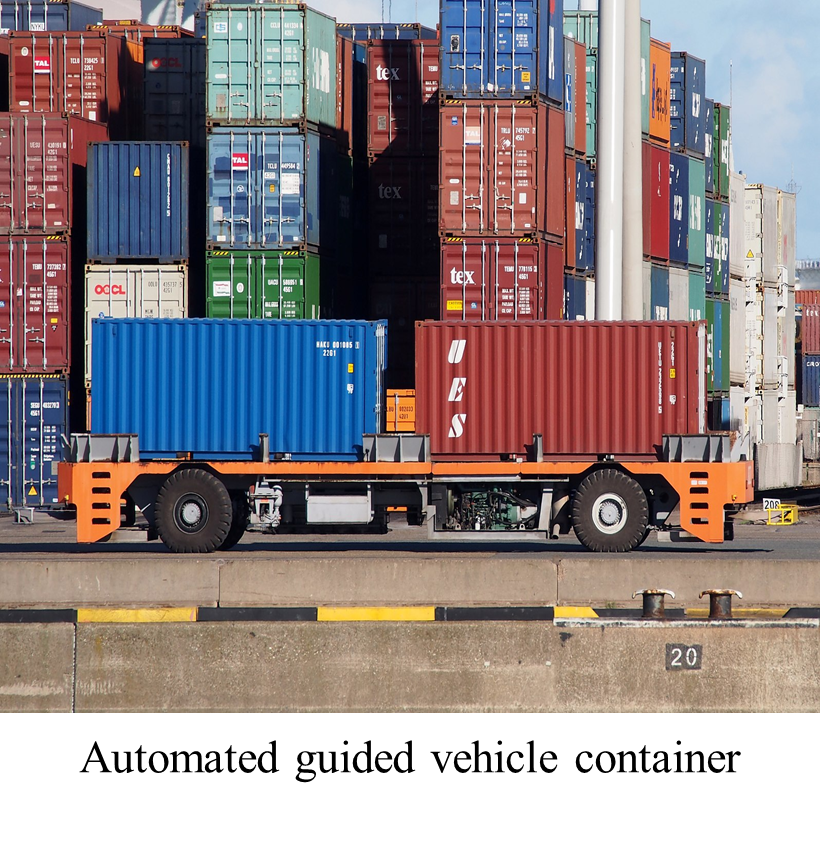 For example, automated cargo movement in a port uses autonomous ship-to-shore cranes, drayage vehicles, container racking systems, etc., which require precise position information and are vulnerable to power loss, physical damage, or malware.
Drones are increasingly used in smart ports to scan containers for damage, deliver packages to or from vessels in ports, inspect under piers and s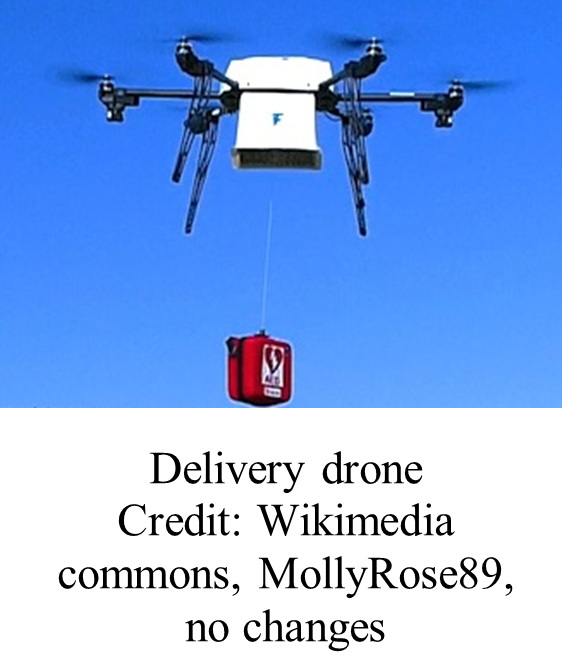 hips or seabed conditions, aid in perimeter security when equipped with cameras and sensors, and survey large areas rapidly. All this while limiting human exposure to dangerous situations. However, these drones are vulnerable to jamming, spoofing, and physical damage.
As a third example, IoT sensors are increasingly used to aid in cargo monitoring. They can transmit real-time data on location, temperature, humidity and other parameters (especially relevant to refrigerated cargo), leading to a dramatic change in cargo monitoring and management. IoT devices often lack security features found in larger systems, it can be difficult to manage software/firmware updates, and IoT devices generate vast amounts of data. All of this requires advanced data analysis capabilities, which can lead to systems failing without a robust IT infrastructure. Moreover, IoT devices are sometimes poorly secured and could be easy targets for hackers who gain access to other systems.
The Emerging Smart Port: Antwerp-Bruge
In his workshop keynote, Erwin Verstaelen, VP Innovation Port of Antwerp-Bruges, talked about the “The Emerging Smartport and the Enabling Role of AI.” He said that ports around the world are transforming themselves to become smart but asked: “what does that mean and why does it matter?” He described how he and his team have been transforming the port into an innovation hub where the market readiness of promising tech such as drones, smart cameras, autonomous ships and digital twins has been field tested and implemented over the past 5 years. These are building blocks of the emerging smart port.
By 2030, AI-supported Decisions Will be Standard Practice in Hamburg
Markus Horschig, Head of Critical Infrastructure, Hamburg Port Authority (HPA), specializes in protecting critical infrastructure at a port, which requires expertise in both cyber and physical security. In his talk, he outlined how the HPA integrates Digital Twins with a structured, scalable AI strategy for structural inspection to enable data-driven, future-ready asset management. He described the development of a “dedicated AI framework for structural inspection with a clear ambition [that} by 2030 AI-supported decisions will be standard practice across HPA.” The framework defines measurable objectives—such as automating up to 80% of core inspection processes and reducing manual effort by 50%. Horschig described initial use cases including automated crack detection, cross-asset damage classification, and a domain-specific “Bauwerks-GPT” that allows conversational access to asset information.
AI and Digital Transformation in the Port of Rotterdam: Building a Smarter, Sustainable Ecosystem
SmartPort is a nonprofit partnership among the Port of Rotterdam Authority, two universities (TU Delft and Erasmus University), and others, aiming at “stimulating alliances, financing scientific research and provid(ing) public knowledge dissemination. The aim is to speed up innovations in the port.” The AI Port Center is a joint activity of TU Delft and Erasmus University. Workshop speakers Sophie Broere, from TU Delft, AI Port Center and SmartPort, and Tim Meijster, from TU Delft and AI Port Center, provided an overview of the Port of Rotterdam and its “innovation ecosystem.” As they observed, “The maritime and port industry is undergoing (rapid) transformation both related to and driven by digitalization and artificial intelligence (AI). AI Port Center and its many partners in the Rotterdam Port investigate together how AI can enable smarter, more sustainable port ecosystems while faced with challenges like the energy transition, modal shifts, and operational resilience.” Broere and Meijster provided examples of AI-enabled systems, including digital twins, edge AI, and generative/agentic AI. Among the interesting examples were the use of LLM in the marine industry to preserve maritime engineering knowledge with AI.
What About U.S. Ports?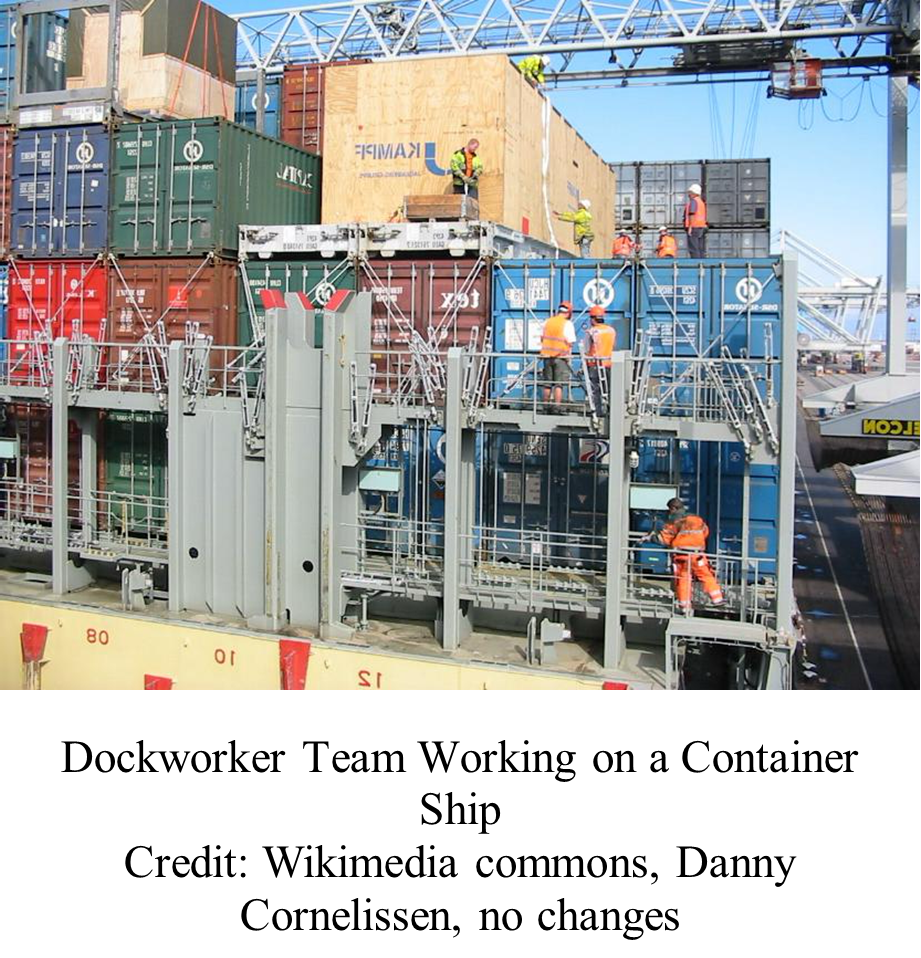
The world’s most advanced and automated “smart” ports are much more advanced than U.S. ports. One of the goals of the workshop was to begin to lay out some of the ideas and challenges and risks of building AI-powered innovations in U.S. ports, ultimately making the U.S. more economically competitive. To this end, workshop participants included those from leading U.S. ports (Los Angeles – Long Beach and New York-New Jersey) as well as smaller ports (PSA Penn Terminals and North Carolina Ports). Geraldine Knatz, retired Executive Director of the Port of LA and now a faculty member at the University of Southern California, discussed the relative importance of the multi-faceted factors that drive the decision to automate container terminals and the realized benefits, drawing upon a survey of container terminal operators. In particular, she discussed the role of labor and its resistance to automation, tracing the history of relevant port labor contracts. Jean-Paul Rodrigue from Texas A&M – Galveston compared U.S. container terminal automation to that in other countries around the world, reporting on a database that includes a large share of the world’s container terminal facilities. He pointed out that container terminal automation is “not a straightforward concept, as it can involve different levels of automation, ranging from equipment deployment (such as automated stacking cranes) to information technologies (such as appointment systems).” He also discussed impediments to automation: investment costs, need for new skill sets, disruption to operations from conversion, and labor opposition. Elenna Dugundji from the MIT Center for Transportation and Logistics discussed the Port of New York/New Jersey and emphasized the importance of untapped capacity such as existing rail infrastructure that could be strategically utilized to improve port performance.
The Cost of Standing Still: Why Ports Can’t Stay the Supply Chain’s Weak Link
 Erez Agmoni, Principal from Interwoven Ventures and former head of Maersk Innovation, raised a key issue: Why ports cannot continue to stay the supply chain’s weak link. Speaking from personal experience, he described how intelligent automation, data-driven decision systems, and scalable operational redesign can unlock throughput, improve resilience, and ensure that ports keep pace with the broader transformation of global logistics. He observed that “Ports are no longer just points of entry and exit; they are now critical constraints on global supply chain resilience, economic competitiveness, and trade stability. As volatility increases across transportation networks, the cost of ports failing to modernize is no longer measured only in congestion or delays, but in cascading disruption across inventories, manufacturing, and downstream logistics.”
Ports are Complex Partnerships
Ports are complex partnerships involving the private sector, government agencies, industry associations, nonprofits, labor, and others. A key to the workshop’s success was involvement of participants from a variety of these sectors. The importance of collaborating, coordinating, and communicating to a port’s resilience was emphasized in a talk by Anne Strauss-Wieder, a nationally respected senior executive with over 45 years of public and private sector experience involving supply chains, industrial and economic development, resilience, and freight movement, now teaching a course at Rutgers. Workshop participants were invited to visit her class where she demonstrated a disaster simulation.
A panel on “AI at an Inflection Point” included private sector participants from Arcadia Impact and Entefy. A panel on “Ports at the Crossroads: Scaling Automation and AI Without Disrupting Operations” included the Executive Director of the Maritime Association of the Port of New York and the COO of the North Carolina State Ports Authority. Other agencies represented at the workshop were New Jersey DOT, the Port Authority of New York/New Jersey, and U.S. Healthcare Threat Intelligence at Medicare (due to their interest in AI-automation and the supply chain). Federal government participation was less than planned as representatives of the U.S. Coast Guard, the U.S. Department of Transportation, and the U.S. Maritime Administration (MARAD) were unable to attend due to budget cuts or to agency shutdown. Joshua Hirschheimer, a Partner in Aerospace & Transportation at Porsche, was one representative of the private sector. He explained a unique business model: Applying what Porsche has learned in automation in auto manufacturing and applying it to applications in other industries, and in particular to “smart implementation for AI-driven automation in ports.” Participants from Nokia Bell Labs, Collaborative Solutions, Pacific Northwest National Laboratory added to the diversity of workshop participants. All of these participants complemented the academic participation from Rutgers, RPI, Texas A&M – Galveston, University of Southern California, MIT, and Washington State.
Participants were split into three groups that met in breakout sessions, each involving a mix of types of organizations represented. Three breakout group reports are being integrated into a workshop report that will be given widespread circulation.

Leave a comment